The starting point was a 2017 decree announcing that written Kazakh would move from the Cyrillic to the Latin alphabet. I began with a narrow interest in typography, then widened it through a mind map and a long phase of collecting Kazakh graphic material, cinema tickets, record sleeves, photographs of shopfront signage, around a broad question: what shape does Kazakh graphic design have, and how has a changing written language shaped it? Those questions were too wide to hold a book together. The turning point came during the 2019 to 2020 lockdown, which I spent in Kazakhstan. At the national library in the capital I found Cinéma poster Kazakhstan, a collection assembled by Mentay Utepbergenov, a key figure in Kazakh cinema. That book gave the project its frame.
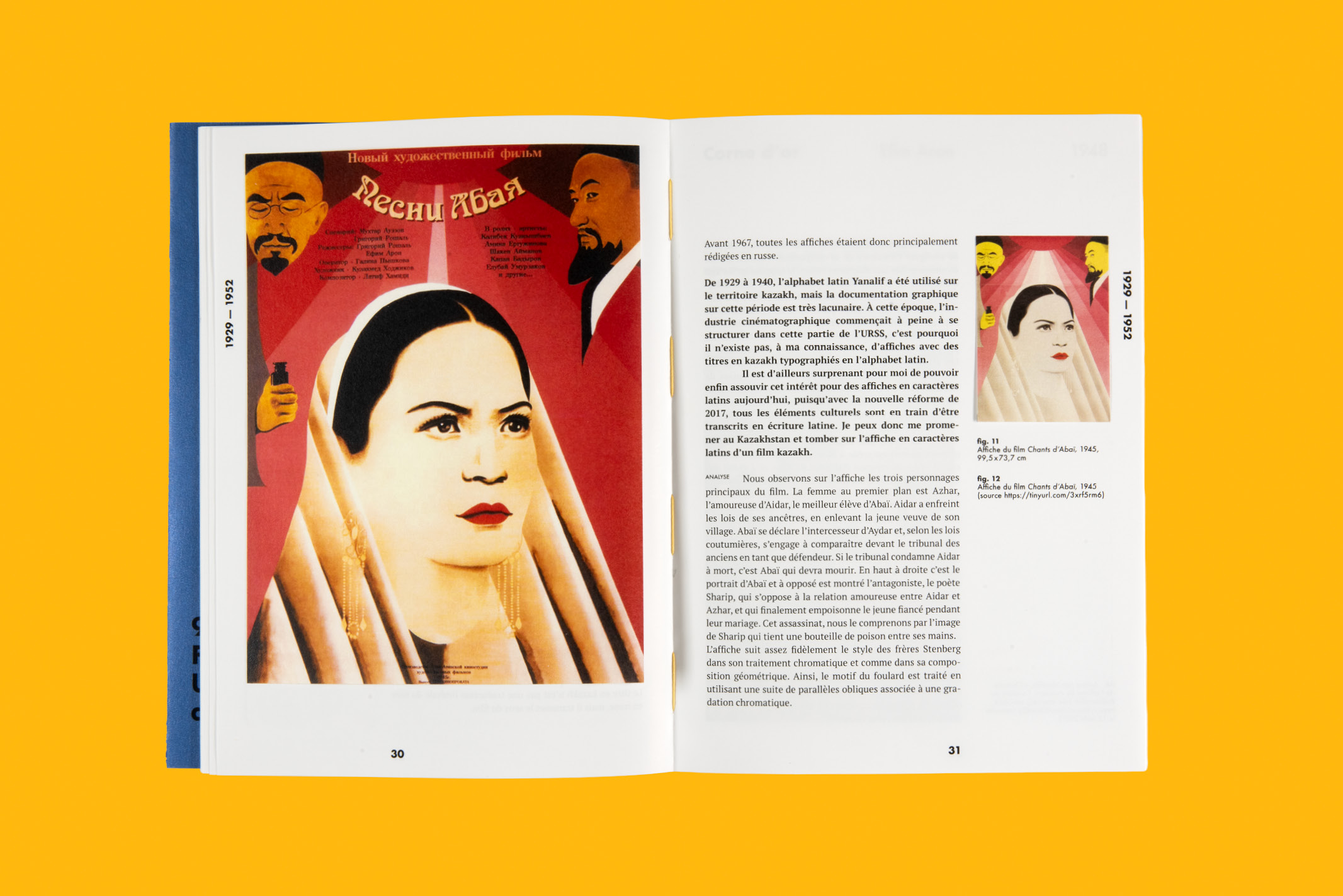
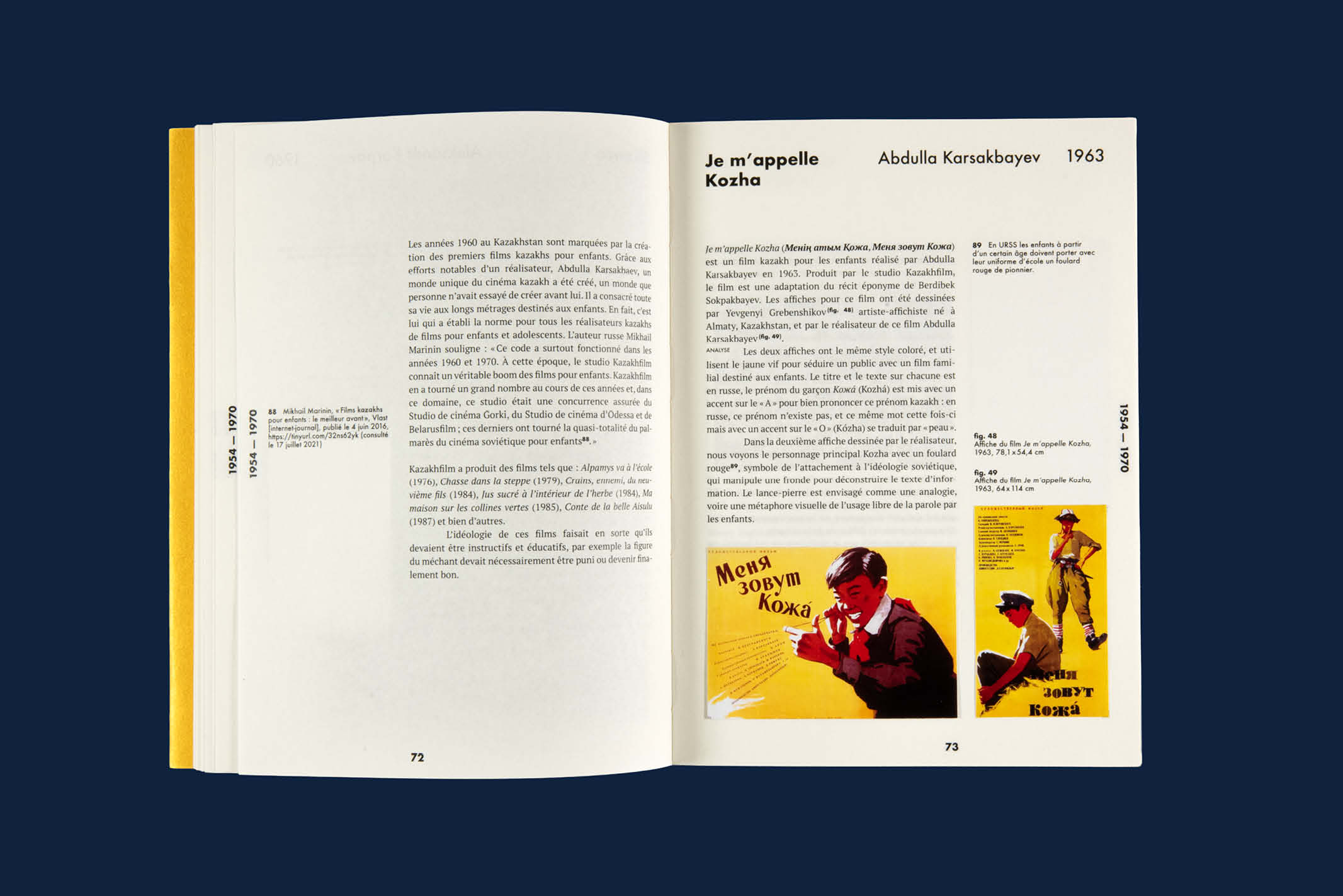
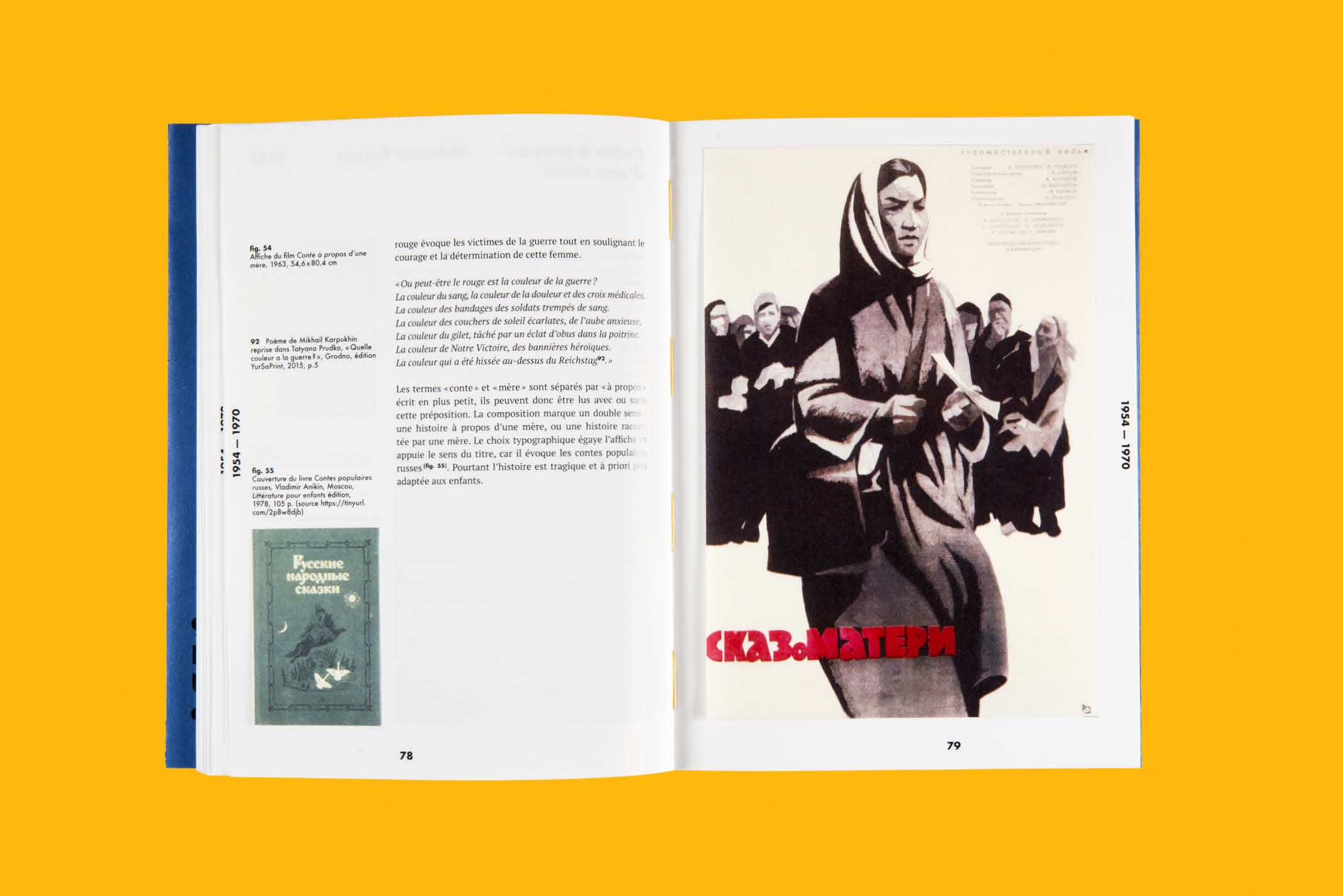
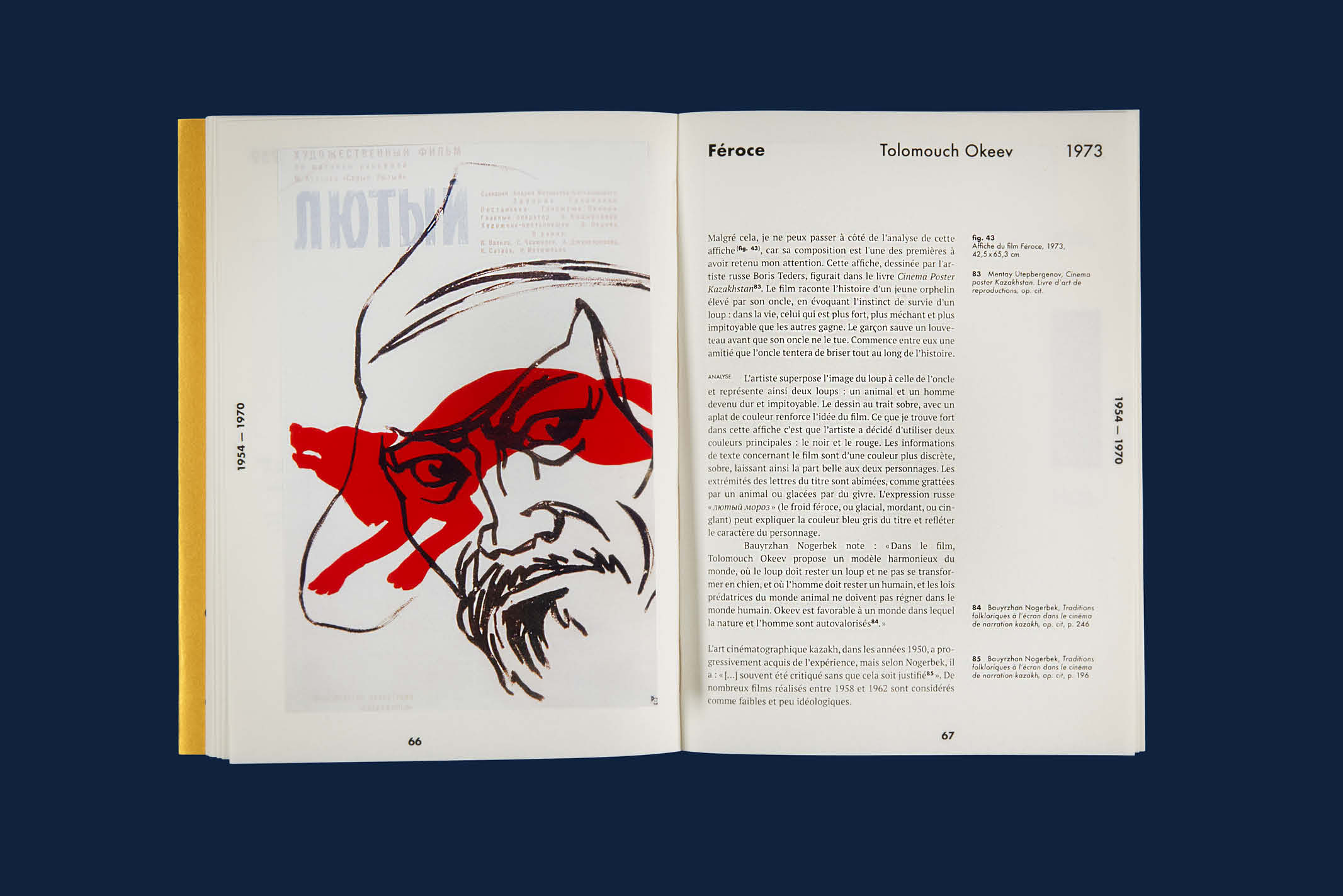
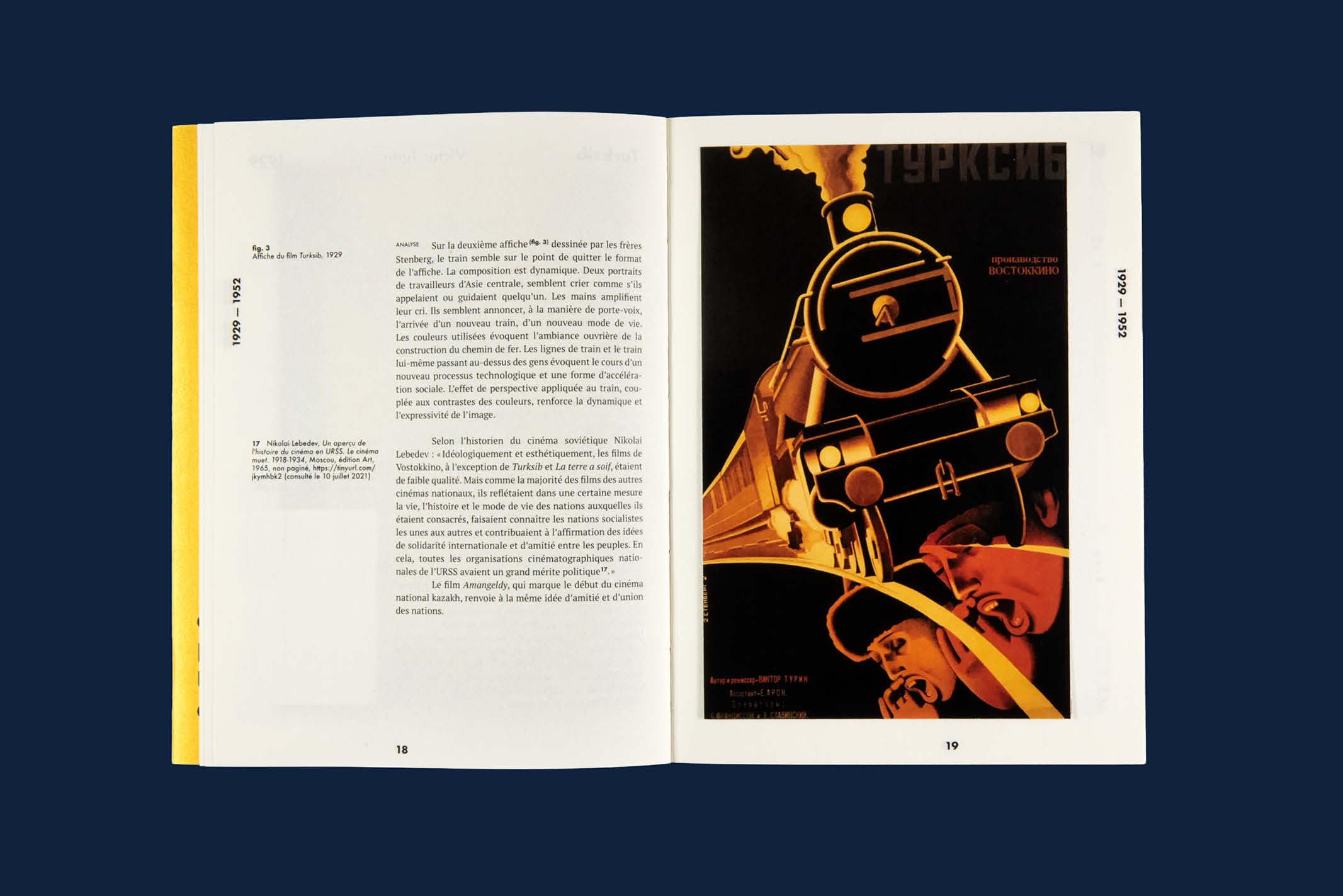
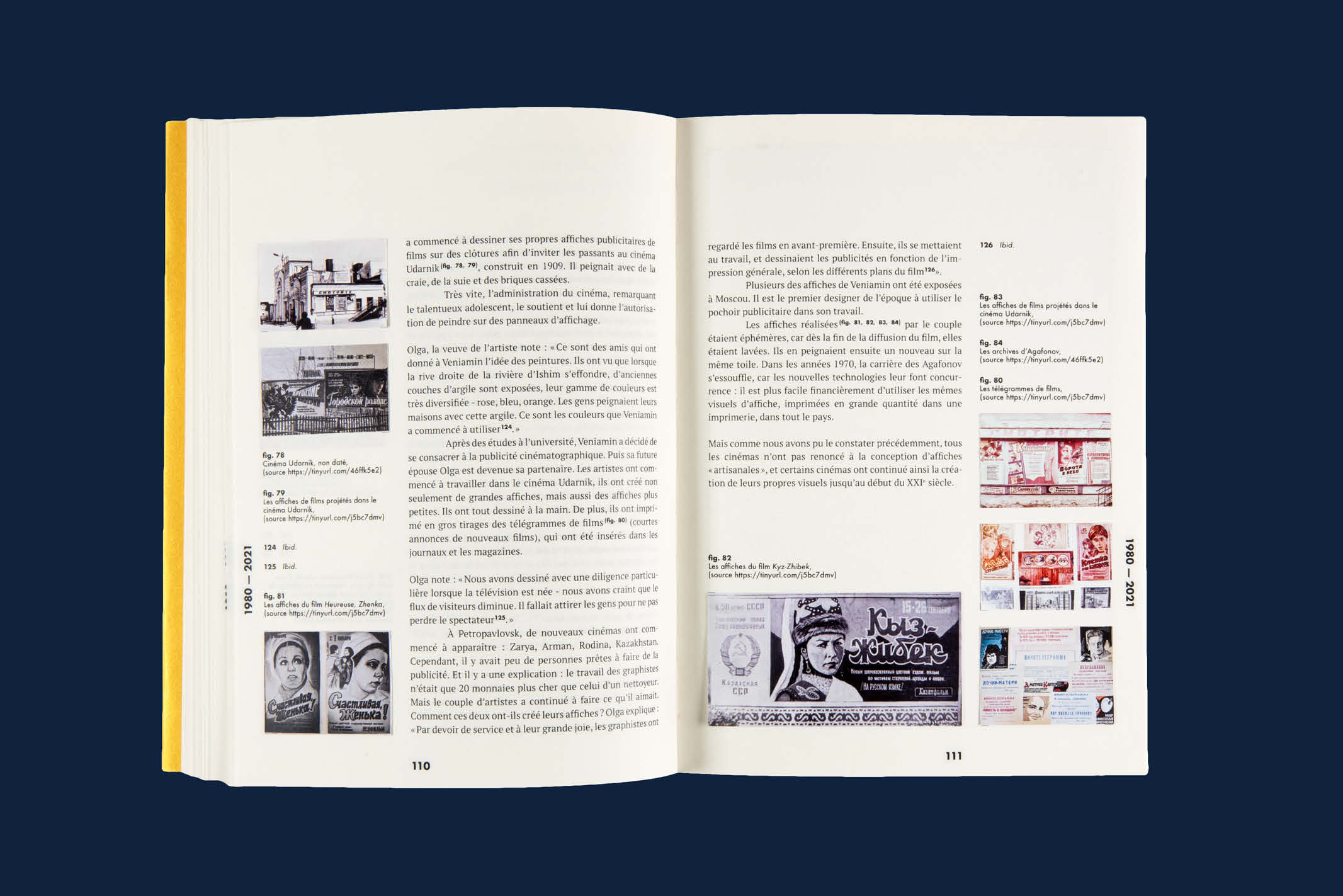
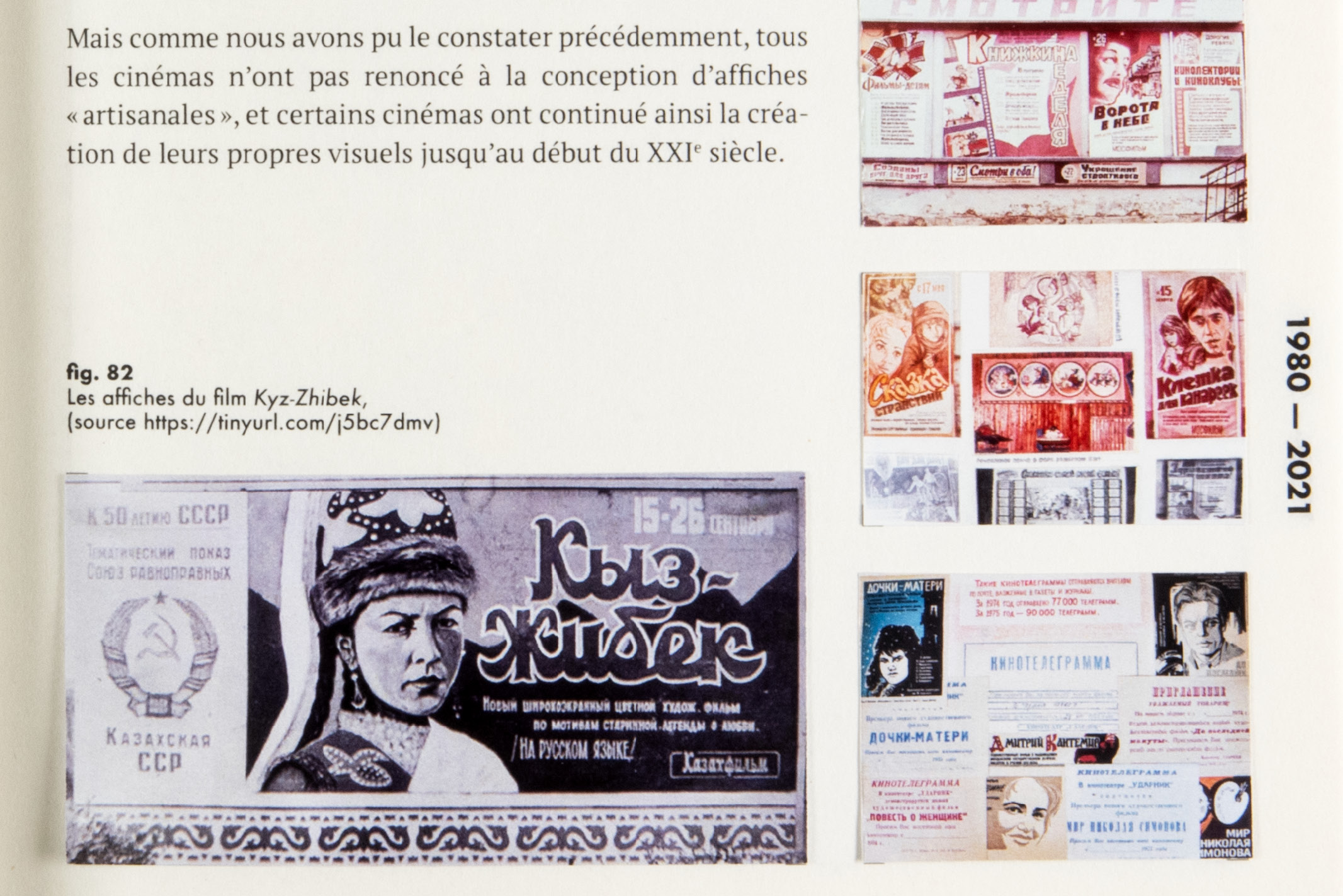
I built the book as a chrono-thematic catalogue, following Kazakh cinema from its place inside the Soviet Union through to independence. I set one rule, fiction films only, and for each one I gathered the context, watched the film, then analysed every version of its poster, landscape and portrait, looking at how and why the illustrators built each image.
Most of the design thinking lives in the object itself. Inspired by the material qualities of period cinema posters, I produced two versions of the book, reversing which paper stock carried the text and which carried the images. Each poster is tipped in along its top edge only, allowing it to behave like a separate object within the publication. The reader can lift it from the page and imagine putting it up themselves—a gesture that ultimately gave the project its title.